

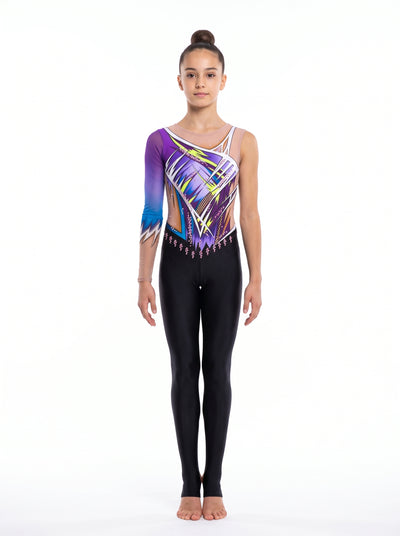
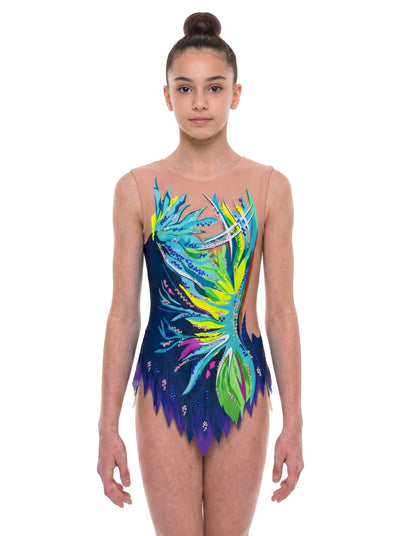
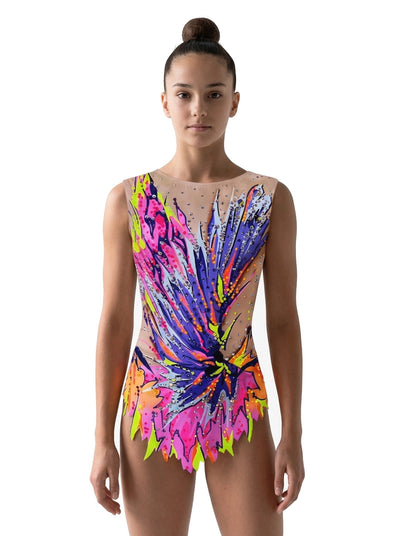




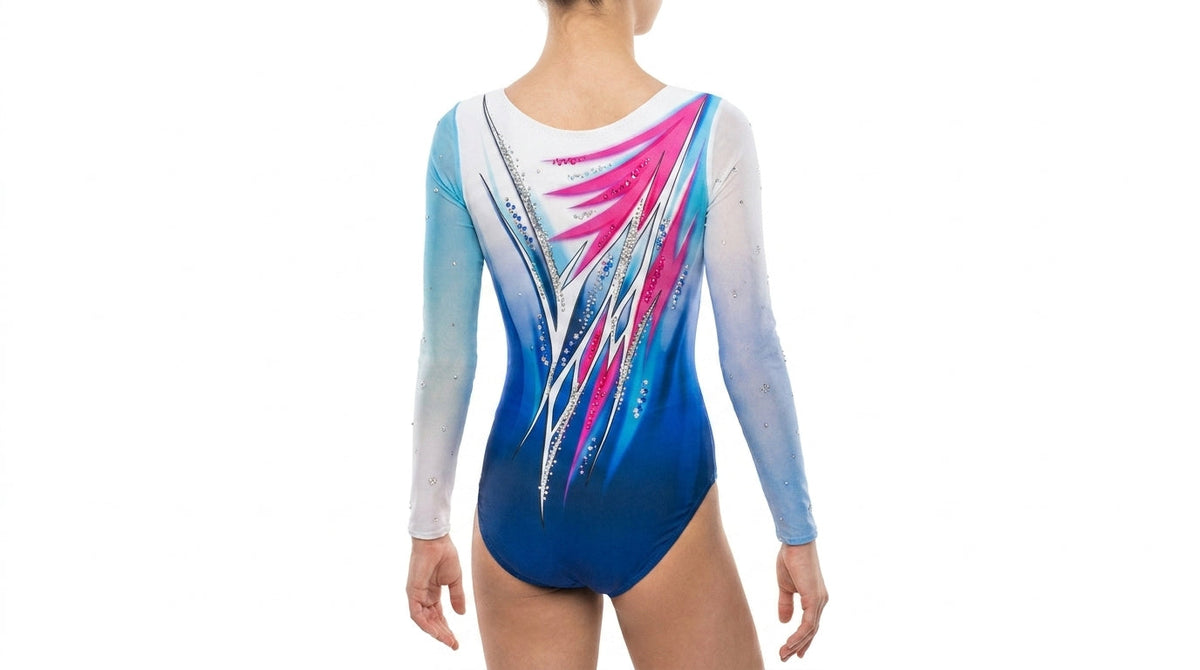
When we started designing VINKOVA's first collections, one of the most strategic decisions we made was also one of the riskiest by market standards: removing the back fastening entirely from all our competition models. Today it's the norm, but when we launched those collections manufacturers used zips or hooks. It isn't a technical limitation or a cost-saving measure; it is a deliberate choice we made after listening to hundreds of coaches and watching how gymnasts actually move on the carpet.
Here is the technical and aesthetic reasoning behind it, because we believe transparency is key to choosing the best kit.
The 3 real problems with a back fastening on competition leotards
The hook or button at the back of the neck has been the standard in rhythmic gymnastics wear for decades because it makes getting dressed easier. In high-level competition, though, it creates three critical drawbacks that directly affect the gymnast:
- 1. Discomfort and pressure: When catching thrown apparatus, in floor flexibility elements, pivots and rolls, the gymnast's back meets the carpet at different angles. A rigid fastening digs into the spine or lower back, a constant distraction and discomfort that breaks the flow of the routine.
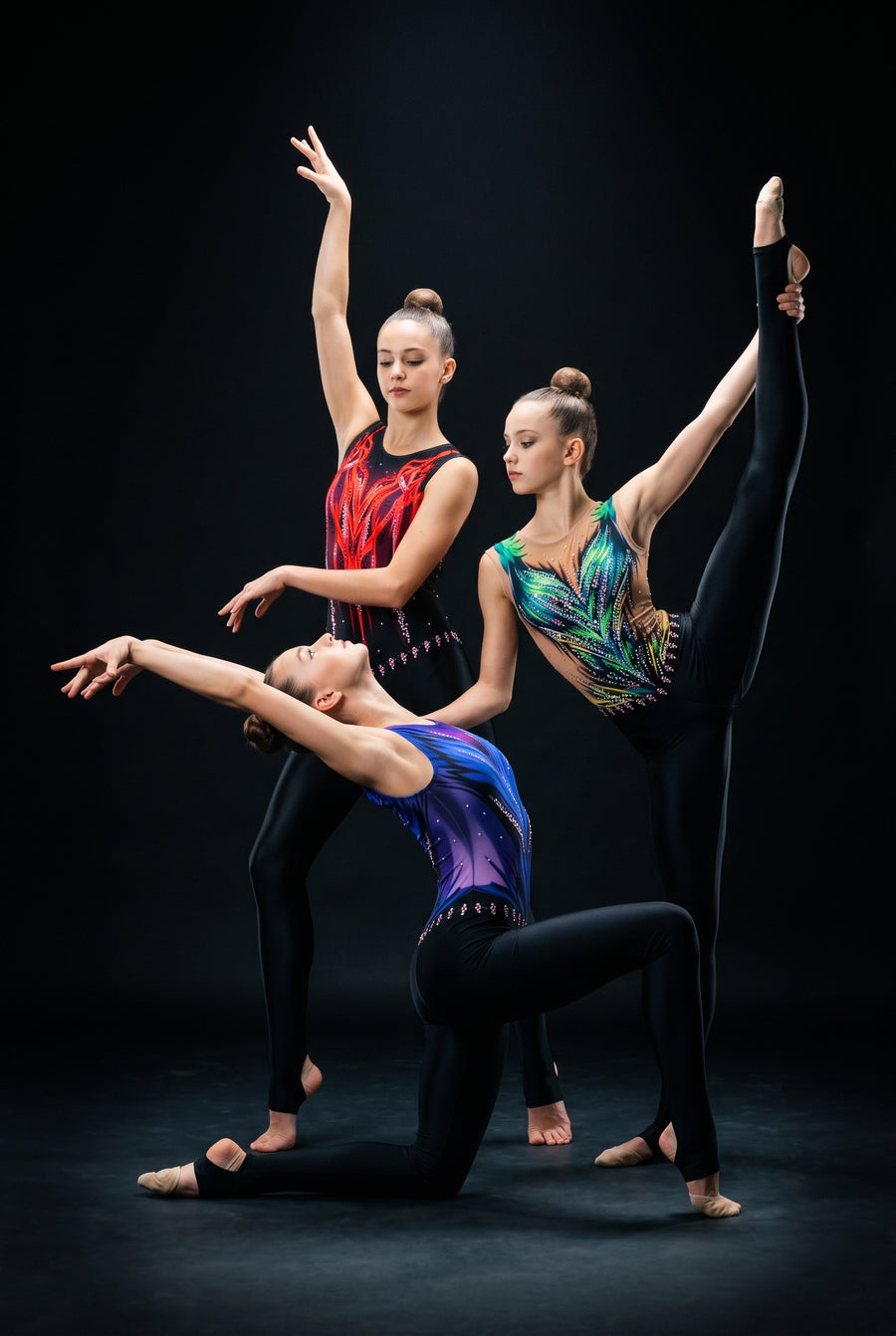
- 2. A break in the design: Fastenings force the use of the familiar "keyhole" (the teardrop-shaped opening at the back). That interruption cuts straight through the artwork. When a design flows along the whole silhouette, as in our Firebird or Lavanda models, the keyhole breaks the visual harmony exactly where the judges are looking during back body difficulties.
- 3. Less independence for the gymnast: A back fastening means she always needs someone to help. At regional or national competitions, where changing rooms are small and warm-up time before going on the floor is tight, having a young gymnast depend on her coach or family to fasten her leotard adds unnecessary stress.
Our technical solution: the boat neckline
To solve these problems, every VINKOVA rhythmic gymnastics leotard is made with a boat-neck pattern: slightly wider at the back than at the front. This anatomical design lets the leotard go on and come off comfortably over the head, with no hardware or fastening of any kind.
Thanks to the very high stretch recovery of our lycras, the neckline returns to its original shape immediately, following the body without giving or gaping, even in the smallest sizes.
"The practical result is immediate: the gymnast is fully independent in the changing room, the back stays completely clean to show off gradients and rhinestones, and we remove any rigid element that could hurt her on the carpet."
How does having no fastening affect sizing?
Removing the back fastening has a direct consequence for the pattern: the leotard has to fit with millimetre precision. With no hook or zip to give a centimetre of play or hide a little looseness, choosing the right size becomes essential.
That is why at VINKOVA we insist on taking the gymnast's measurements properly and on choosing the size ourselves before any design goes to cutting and sewing. It isn't a sales formality; it is the only way to make sure a leotard without a fastening fits like a second skin and performs at 100% under competition pressure.
A design philosophy built around performance
After years of using this fastening-free neckline, the response from clubs, federations and gymnasts has been unanimous: the comfort in turns and the impact of a clean back more than make up for the change in how you get dressed.
If you have questions about how this neckline fits your daughter or your team, or want to plan your next club kit with complete confidence, write to us at shop@vinkovaleotards.com. We'll be happy to guide you step by step.
How We Choose the Lycra for a Collection: The Process Behind Every Leotard