




Rhythmic gymnastics is an Olympic sport in which gymnasts perform choreographed routines to music while handling one of four apparatus — hoop, ball, clubs, or ribbon — either individually or in groups of five. It combines dance, flexibility, and acrobatic body skills with continuous apparatus mastery, and is governed by the Fédération Internationale de Gymnastique (FIG). At the Olympic Games it has been contested exclusively as a women's event since 1984.
Rhythmic gymnastics is one of sport's most arresting sights — an athlete moving in perfect synchrony with music, wielding a ribbon or hoop with an almost impossible blend of precision and grace. If you've just discovered the sport (perhaps through a daughter who can't stop watching competition videos, or a coach who handed you this link), welcome. This guide covers everything: what rhythmic gymnastics is, where it came from, the apparatus, how competitions work, and how to take the first steps.
What Is Rhythmic Gymnastics?
Rhythmic gymnastics is a competitive sport in which gymnasts — individually or in groups — perform choreographed routines set to music while handling one or more hand apparatus. It sits under the umbrella of gymnastics governed by the Fédération Internationale de Gymnastique (FIG) and has been an Olympic discipline since the 1984 Los Angeles Games.
What makes it distinct from artistic gymnastics is the combination of dance, acrobatics, flexibility, and apparatus handling. There are no vaulting tables or uneven bars — the floor is the stage, and the apparatus is both a tool and an expression of the routine's artistry.
What Is a Rhythmic Gymnast?
A rhythmic gymnast is an athlete who performs choreographed routines to music while manipulating a hand apparatus — hoop, ball, clubs, or ribbon — combining the flexibility of a dancer, the precision of a juggler, and the strength of a gymnast. Every routine demands two things at once: body difficulty (leaps, turns, balances, and flexibility elements) and continuous apparatus handling, without the apparatus ever going still.
Three things define what it takes to be a rhythmic gymnast:
- Training volume. Recreational gymnasts train around 2–6 hours a week. Competitive club gymnasts typically train 12–20 hours a week, and elite international gymnasts often exceed 30–40 hours, split between ballet, flexibility work, apparatus technique, and full routine run-throughs.
- Core qualities. Flexibility, coordination and fine motor control (the apparatus punishes imprecision instantly), musicality and expressive ability, spatial awareness for throws and catches, and the discipline to repeat a single element hundreds of times until it is clean.
- Typical ages. Most rhythmic gymnasts start between 4 and 8 years old. Under FIG rules, gymnasts compete internationally as juniors from age 13 and as seniors from the year they turn 16 — an unusually young competitive peak compared with most Olympic sports.
Where Does Rhythmic Gymnastics Come From? A Brief History
The sport grew from early 20th-century European traditions in rhythmic movement, drawing on Swedish gymnastics, the Dalcroze method of music-and-movement education, and the expressive dance ideas of Isadora Duncan. Soviet sports institutions formalized these elements into a competitive discipline in the 1940s and 50s, and the first World Championships were held in Budapest in 1963.
The FIG recognized rhythmic gymnastics as a full discipline in 1961. It entered the Olympic program as a women's individual event in 1984, and group competition was added at the 1996 Atlanta Games. Today it is competed at all levels from local club meets to the Olympic Games, with the FIG World Championships as the sport's premier annual event.
What Are the Rhythmic Gymnastics Apparatus?
The apparatus are the defining element of rhythmic gymnastics — each one demands a different set of technical skills and creates a different visual vocabulary. For senior individual competition, the FIG currently recognizes four apparatus:
Hoop
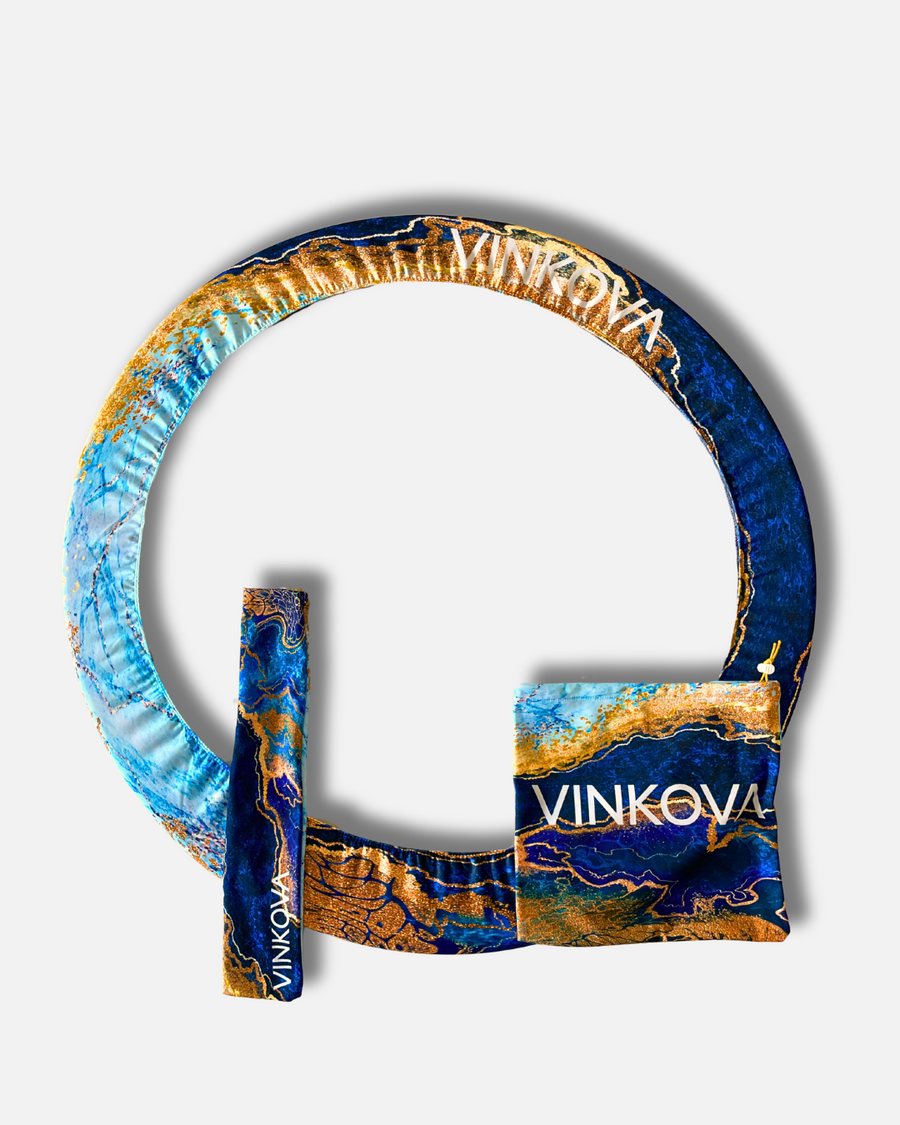
A rigid circular hoop, with an inner diameter of 80–90 cm under FIG apparatus norms (the exact size depends on the gymnast's height). Skills include rotations on the body and on the floor, throws and catches, and rolling the hoop along the floor or over the body. The hoop demands clean lines and precise spatial awareness.
Ball
A smooth rubber ball that must never be gripped — it rests in the palm or fingers at all times. Skills focus on rolls (along the body and floor), throws, bounces, and waves. The ball rewards fluidity and softness; any moment of tension in the wrist is immediately visible.
Clubs
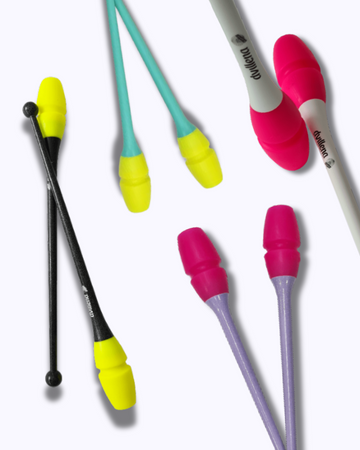
Pairs of club-shaped implements measuring 40–50 cm under FIG apparatus norms. Shorter clubs (around 36–41 cm) are widely used for training and younger age groups. Clubs are used in mills, throws (single and double), taps, and asymmetric work with one hand doing something different from the other. They are considered among the most technically demanding apparatus.
Ribbon
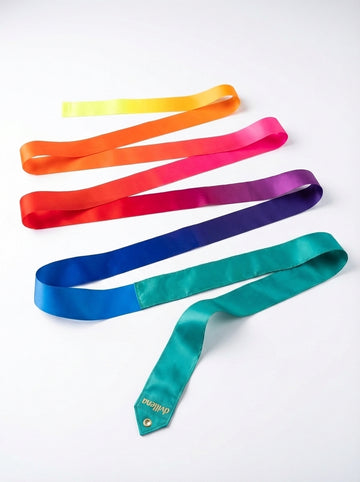
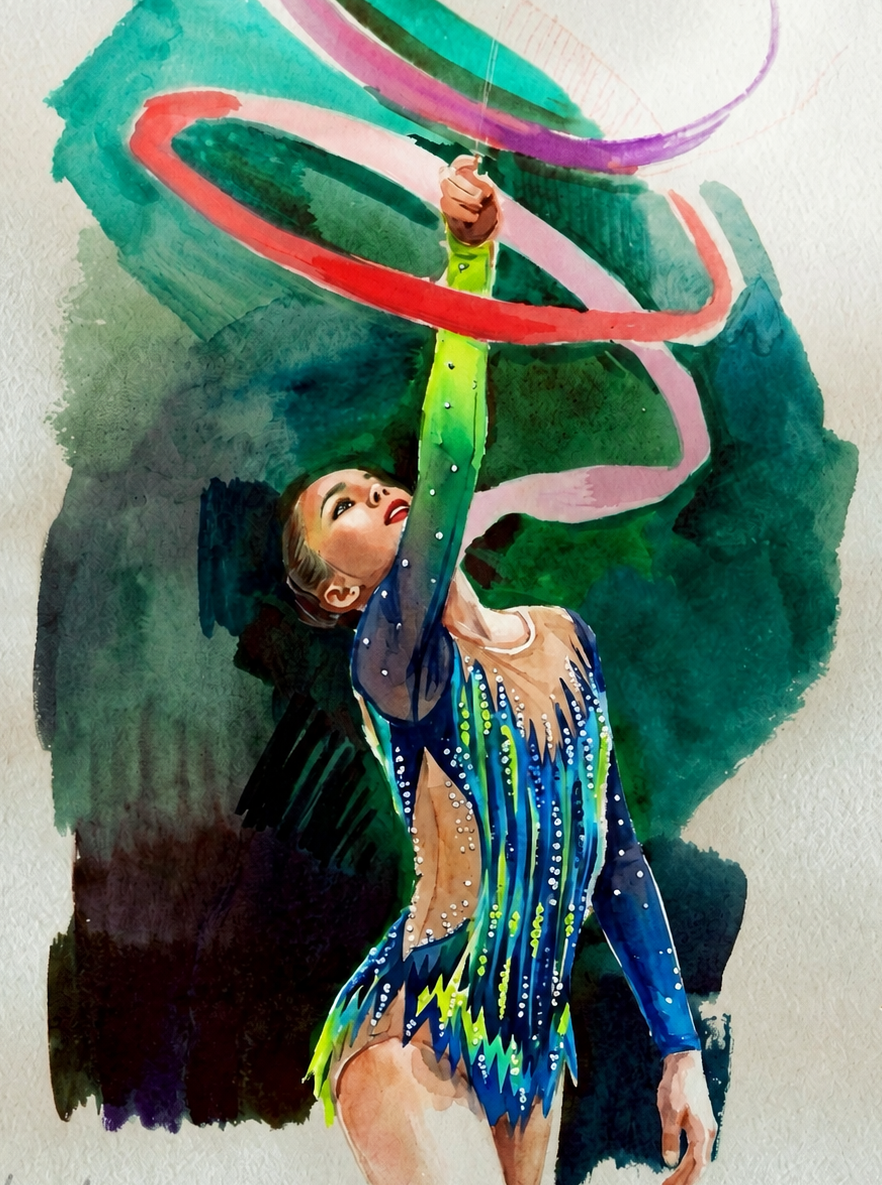
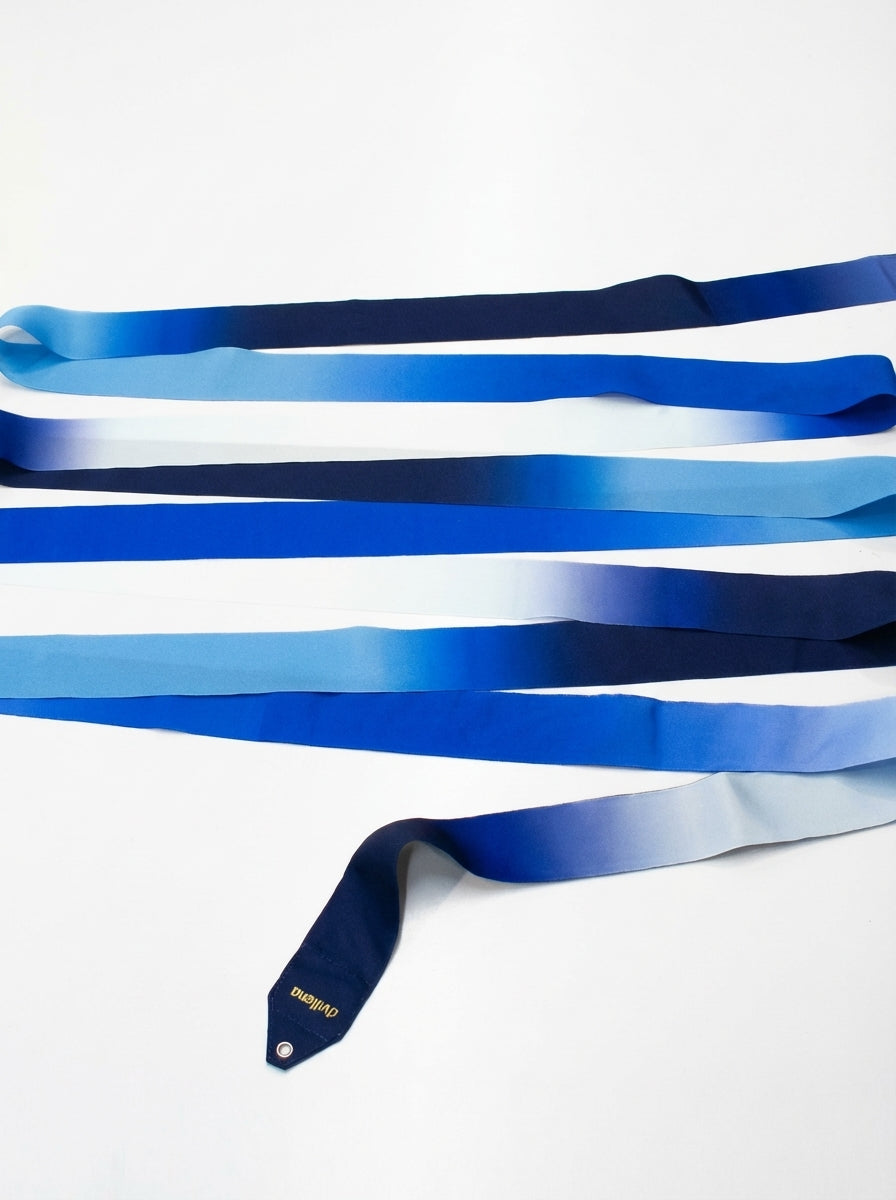
A long satin ribbon — a minimum of 6 metres for senior competition, and 5 metres for junior categories — attached to a stick of 50–60 cm. The ribbon must be in constant motion to remain visible; any knot or tangle is penalized. Spirals, snakes, throws, and figure-eights are the core vocabulary. The ribbon is the apparatus most people picture when they think of rhythmic gymnastics.
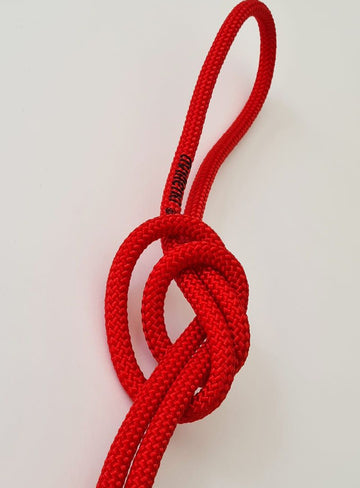
The rope — once a senior individual apparatus — is still used in some junior and group competition formats, but it is not currently part of the senior individual program. For a deep dive into equipment specifications and how to choose the right apparatus for training, see our complete apparatus guide.
Looking for competition-grade apparatus? Browse Vinkova's apparatus collection for hoops, ribbons, clubs, and more.
How Does Group Competition Work?
Alongside individual events, rhythmic gymnastics features group competition — five gymnasts performing together, either with five identical apparatus or with a split (for example, three hoops and two pairs of clubs). Synchronization, spatial formations, and the exchange of apparatus between gymnasts add a layer of complexity that individual competition doesn't have. Group events are often the most visually spectacular part of any major competition.
How Is Rhythmic Gymnastics Judged?
Rhythmic gymnastics uses the FIG Code of Points, which is updated on a four-year Olympic cycle — the current cycle runs from 2025 to 2028. Routines are evaluated across two main panels:
- Difficulty (D) — Judges score the technical content: the body difficulty (leaps, turns, balances, and flexibility elements) and the apparatus mastery elements (the complexity and risk of the handling skills).
- Execution (E) — A separate panel judges the quality of movement: artistry, choreography, musicality, and technical execution. Deductions are applied for faults such as drops, falls, out-of-bounds steps, and apparatus leaving the competition area.
The final score is calculated by combining Difficulty and Execution scores (minus deductions). At major championships, multiple judges per panel are used and the highest and lowest scores are often dropped to reduce individual bias. The system is designed to reward gymnasts who push difficulty while maintaining quality — the hardest routine in the world means nothing if the ribbon hits the floor.
What Are the Levels of Competition in Rhythmic Gymnastics?
The competitive pyramid in rhythmic gymnastics has multiple tiers:
Club and Regional Level
Most gymnasts begin competing at club level, often under national federation age-group categories. Rules at this level are simplified — apparatus difficulty requirements are lower, and routines are shorter. This is where the foundations are built.
National Level
Each country's national federation runs its own championship structure, typically split into junior (under-16) and senior categories. National championships serve as selection events for international squads.
International Level
The FIG calendar includes World Cup events held across multiple countries, continental championships (European, Asian, Pan American, etc.), and the World Championships — the sport's flagship annual event. In Olympic years, the Games themselves are the peak.
World Championships 2026
The next FIG World Championships in rhythmic gymnastics takes place 12–16 August 2026 in Frankfurt am Main, Germany. It is one of the most closely watched events of the year, bringing together the world's best individual gymnasts and groups. If you're planning to follow the sport this season, Frankfurt is the event to watch. Read more in our World Championships 2026 guide.
What Do Rhythmic Gymnasts Wear?
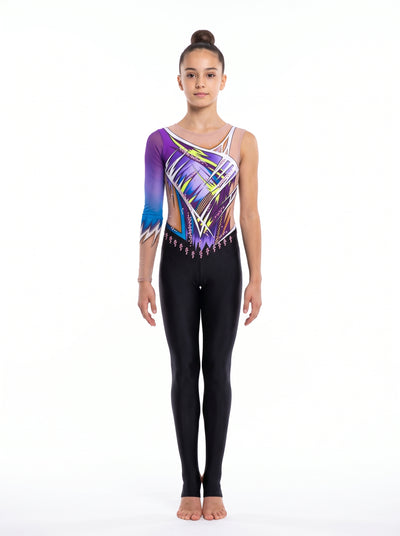
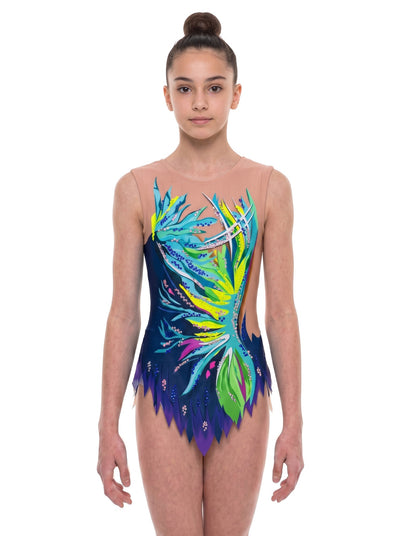
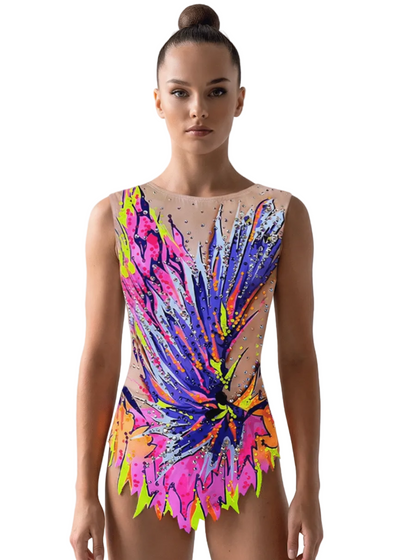
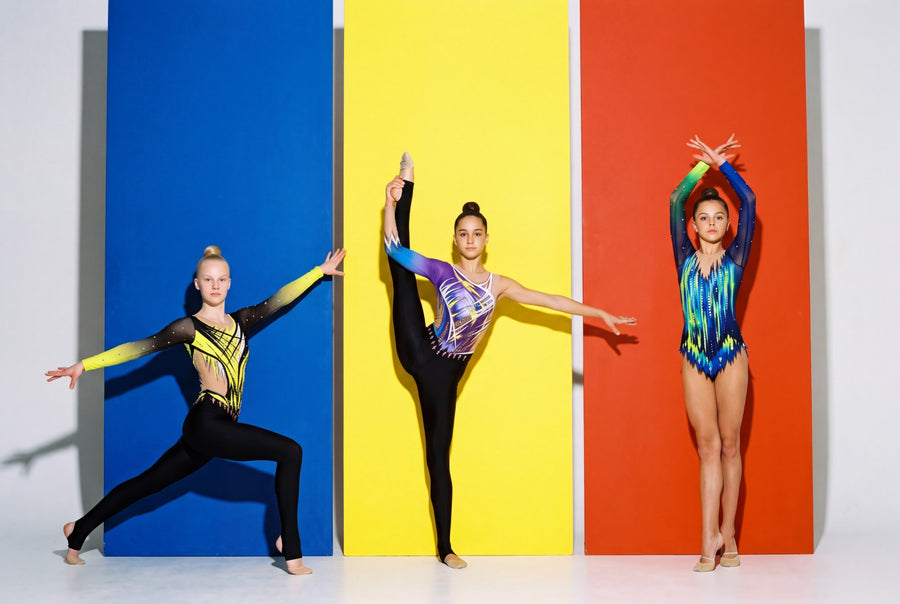
Competition leotards in rhythmic gymnastics are not merely uniforms — they are part of the performance. FIG regulations require that leotards cover the body appropriately for the competitive level, and at senior and elite levels, designs often incorporate elaborate rhinestone work, gradient fabrics, and colors coordinated with the apparatus and music.
For clubs and gymnasts looking for competition-ready leotards, Vinkova designs and makes every piece in Spain. Our rhythmic gymnastics leotard collection covers catalog designs from training level through to senior competition, including styles built to meet current opacity regulations.
How to Get Started in Rhythmic Gymnastics
If you're a parent researching the sport for your child, or someone who wants to begin training as an adult recreational gymnast, here is what to expect:
- Find a club with a qualified coach. Look for coaches certified by your national gymnastics federation. The quality of early technical instruction has an outsized effect on long-term development.
- Start with basics — no apparatus. The first months focus on flexibility, posture, turns, and leaps. Apparatus comes later, once the body fundamentals are in place.
- Expect a long horizon. Elite gymnasts typically begin at 4–6 years old, but recreational and artistic enjoyment of the sport is available at any age. Many clubs have adult groups.
- Equipment comes gradually. A club will often provide shared apparatus for beginners. Personal equipment becomes relevant when a gymnast is training regularly and competing.
For a full breakdown of what a gymnast needs at each stage — including how to read leotard regulations — see our guide to choosing a rhythmic gymnastics leotard.
Frequently Asked Questions
Is rhythmic gymnastics an Olympic sport?
Yes. Rhythmic gymnastics has been part of the Olympic Games since 1984, when the individual all-around event was introduced. Group competition was added at the 1996 Atlanta Olympics. It is competed exclusively as a women's event at the Olympic level, though men's rhythmic gymnastics exists as a competitive discipline in several countries, notably Japan.
What is a rhythmic gymnast?
A rhythmic gymnast is an athlete who performs choreographed routines set to music while handling an apparatus — hoop, ball, clubs, or ribbon — combining dance, flexibility, coordination, and apparatus skill. Most start between 4 and 8 years old; under FIG rules they can compete internationally as juniors from age 13 and as seniors from the year they turn 16.
How many hours do rhythmic gymnasts train?
It depends on the level: recreational gymnasts train around 2–6 hours per week, competitive club gymnasts typically 12–20 hours, and elite international gymnasts often 30–40 hours per week, split between ballet, flexibility work, apparatus technique, and routine run-throughs.
What are the four apparatus in rhythmic gymnastics?
The four apparatus currently used in senior individual competition are the hoop, ball, clubs, and ribbon. The rope has been used historically at the senior level and remains part of some junior and group competition formats, but it is not currently a senior individual event apparatus.
What size are the apparatus?
Under FIG apparatus norms: the hoop has an inner diameter of 80–90 cm; clubs measure 40–50 cm; and the ribbon is a minimum of 6 metres for seniors and 5 metres for juniors, on a stick of 50–60 cm. Shorter clubs and ribbons are commonly used for training and younger categories.
How is rhythmic gymnastics scored?
Routines are judged under the FIG Code of Points (2025–2028 cycle) by two panels: a Difficulty panel, which scores the technical content of body skills and apparatus handling, and an Execution panel, which scores artistry, choreography, and technical quality. Deductions are applied for errors such as drops and out-of-bounds steps. The final score combines both panels.
At what age do gymnasts start rhythmic gymnastics?
Many elite gymnasts begin as young as 4–6 years old, which allows time to develop the flexibility and technical foundation needed for high-level competition. That said, recreational and fitness-oriented participation is available at any age, and many clubs welcome adult beginners. Competitive categories exist for children as young as 7–8 depending on the national federation.
Rhythmic Gymnastics World Championships 2026 in Frankfurt: Dates, Venue and What to Expect
Rhythmic Gymnastics Apparatus Explained: Hoop, Ball, Clubs, Ribbon and Rope