
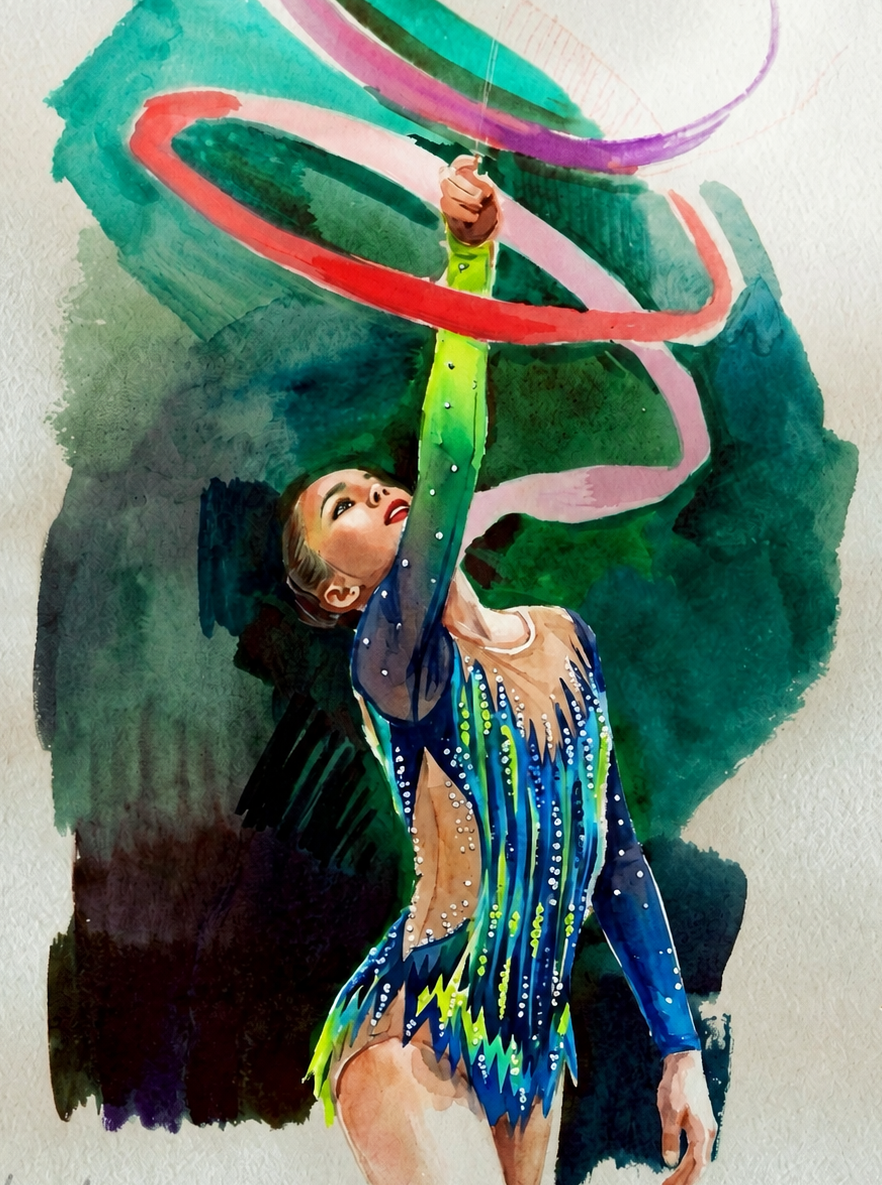

The ribbon is the most recognizable apparatus in rhythmic gymnastics — and the easiest one to buy wrong. Unlike a leotard, where fit is personal, a gymnastics ribbon is governed by clear rules: the length depends on the gymnast's age and competition level, the weight has a minimum, and the quality of a single small component (the swivel) decides whether routines flow or knot. This guide covers exactly what to look for, whether you're buying a first training ribbon for a beginner or a FIG-compliant competition ribbon for a senior gymnast.
What Is a Rhythmic Gymnastics Ribbon?
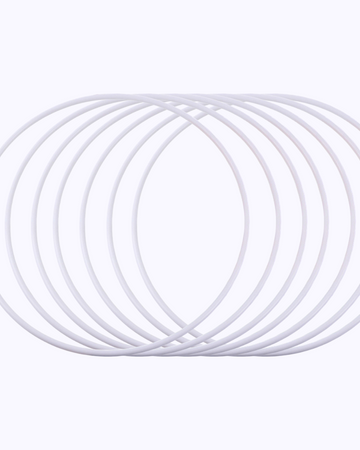
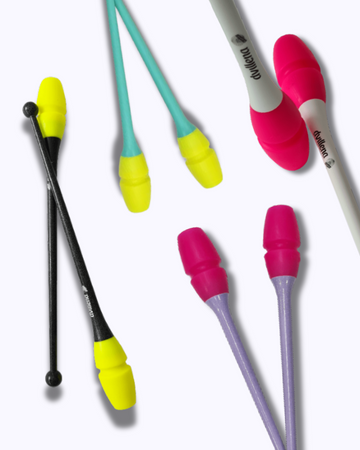
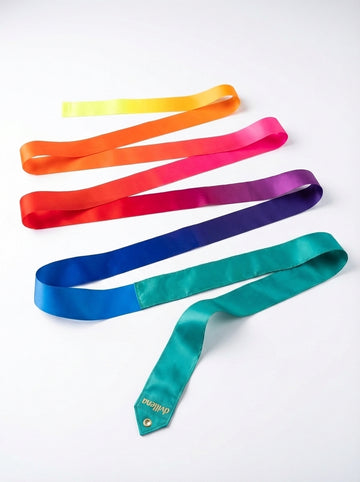
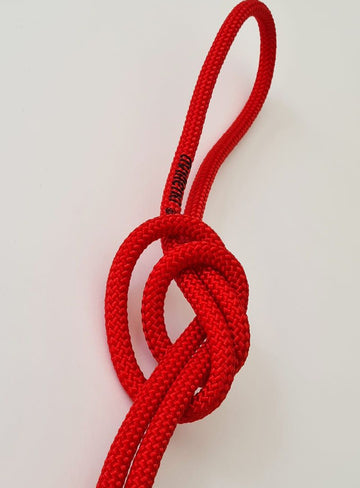
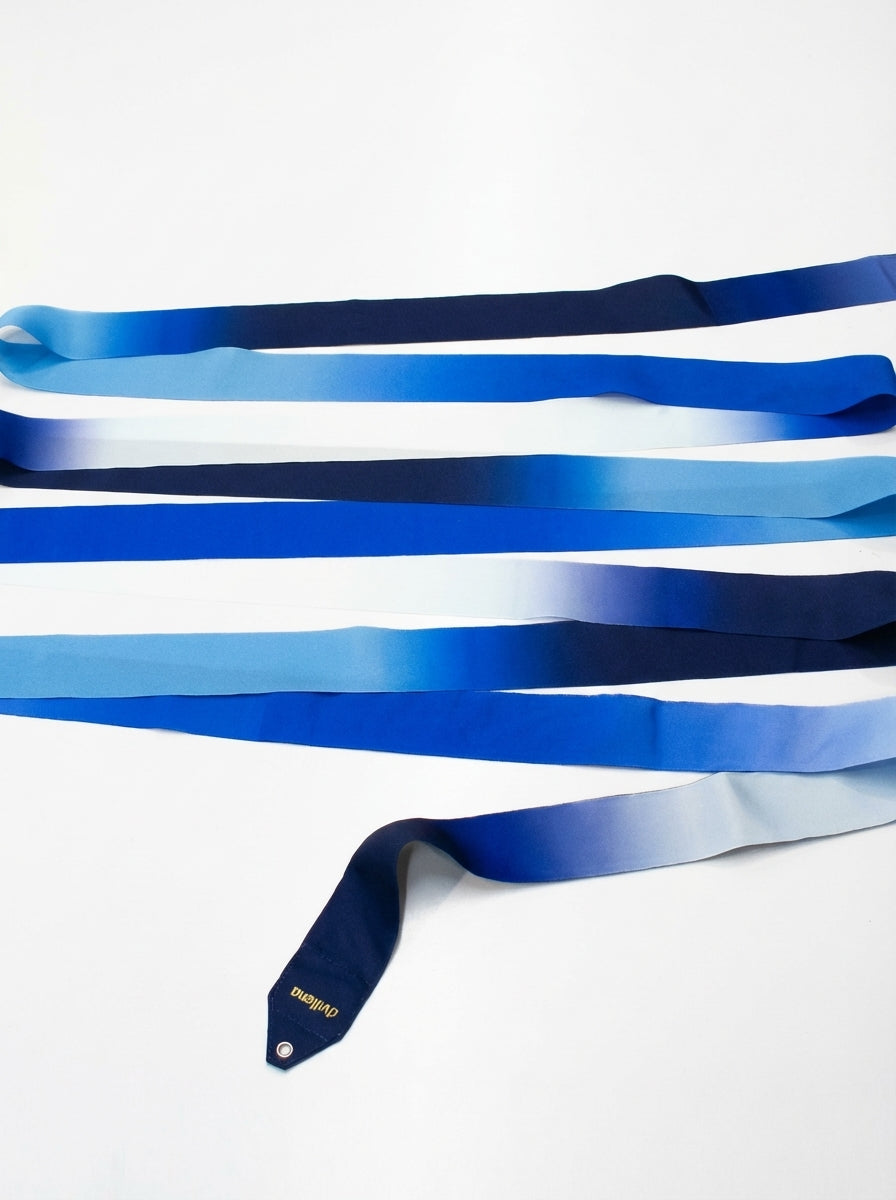
A rhythmic gymnastics ribbon is a long strip of satin attached to a short stick (often called the baguette) by a metal swivel that lets the ribbon rotate freely without twisting. In competition, the gymnast must keep the ribbon in constant motion, drawing spirals, snakes and circles in the air — a knotted ribbon or a dead, drooping pattern is an automatic deduction. The ribbon is one of the four apparatus of the current FIG senior individual program, alongside hoop, ball and clubs; if you want the full picture of how it compares to the others, see our complete rhythmic gymnastics apparatus guide.
How Long Is the Ribbon in Rhythmic Gymnastics? Length by Age and Level
The short answer: senior gymnasts use a 6-meter ribbon, juniors typically use 5 meters, and beginners and children's categories use 4 meters. The stick is 50–60 cm long, and the ribbon itself must weigh at least 35 g under FIG specifications. Exact requirements for younger categories are set by each national federation, so always confirm with the coach or the competition rulebook before buying.
| Category / level | Ribbon length | Notes |
|---|---|---|
| Beginners and children's categories | 4 m | Shorter length = easier control while learning spirals and snakes |
| Junior | 5 m | Standard in most national programs; check your federation's rules |
| Senior (FIG international) | 6 m | Required for FIG competition; minimum weight 35 g (ribbon only) |
| Stick (baguette) | 50–60 cm | Usually fiberglass; connects to the ribbon via a metal swivel |
Why does length matter so much? A ribbon that's too long for the gymnast won't stay "alive" — the tail drops to the floor mid-pattern, which is penalized. One that's too short for her category simply isn't legal in competition. Buying the correct length for the gymnast's current level, rather than "one to grow into," is the single best purchasing decision you can make.
What Makes a Quality Ribbon: Four Things to Check
1. The swivel
The swivel is the small rotating joint between stick and ribbon, and it's where cheap ribbons fail. A good swivel spins freely and silently through fast small circles; a stiff or worn one transmits twist into the satin and produces knots no matter how clean the gymnast's technique is. If you handle the ribbon in person, spin it — any resistance is a red flag.
2. The satin
Competition ribbons use a satin with enough body to hold crisp shapes in the air. Very light, flimsy satin collapses mid-spiral; overly stiff material feels heavy in the wrist and tires the gymnast. The satin should also be reinforced at the attachment end, where stress concentrates.
3. Double-sided color
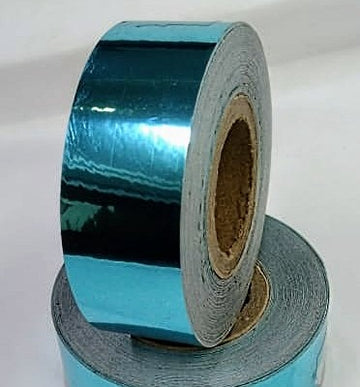
The ribbon shows both faces constantly as it rotates. A ribbon dyed or printed on one side only flashes a pale reverse with every turn — it looks unfinished under competition lighting. Look for color that is equally saturated on both sides.
4. Moisture resistance
Gyms are humid and routines are sweaty. Satin that absorbs moisture gets heavier and limper as the routine progresses. Quality ribbons carry an anti-humidity treatment that keeps the weight and stiffness stable from first spiral to final throw.
How to Care for Your Ribbon
- Iron it regularly at low temperature (silk/synthetic setting). Creases kill the ribbon's flight; a smooth, freshly ironed ribbon draws visibly cleaner shapes.
- Use a ribbon winder for storage and transport. Rolling the ribbon flat around a winder prevents the creases and folds that come from stuffing it into a bag.
- Hand wash only, in cold water with mild soap, and air dry flat. Machine washing wrecks the stiffening and anti-humidity treatments.
- Check the swivel periodically and replace the ribbon (or the stick's attachment) when rotation stops being smooth.
Where to Buy One
Once you know the right length for your gymnast's category, the rest is quality. Vinkova's rhythmic gymnastics ribbon collection covers training and competition ribbons across lengths, with smooth swivels and double-sided satin — the same standard of equipment you'll see on the sport's biggest stage at the 2026 World Championships in Frankfurt (12–16 August). If you're outfitting a gymnast from scratch, pairing the ribbon with matched competition-ready ribbon colors and leotard design pays off in presentation scores.
Frequently Asked Questions
How long is the ribbon in rhythmic gymnastics?
It depends on the level: senior gymnasts competing under FIG rules use a 6-meter ribbon, juniors typically use 5 meters (confirm with your national federation), and beginners and children's categories use 4 meters. The ribbon must weigh at least 35 g, and the stick is 50–60 cm long.
What is the stick of the ribbon called?
It's usually called the ribbon stick or, borrowing from French, the baguette. It's typically made of fiberglass, measures 50–60 cm, and connects to the satin ribbon through a metal swivel that allows continuous rotation without twisting the material.
Can you cut a ribbon shorter for a younger gymnast?
Technically yes — a 6 m ribbon can be shortened to 5 m or 4 m by cutting from the free end and re-hemming the edge so it doesn't fray. In practice it's rarely worth it: an unhemmed or unevenly cut end flutters badly, and you lose the manufacturer's finished edge. If the gymnast competes, buy the length her category requires.
Why does my ribbon keep knotting?
Three usual causes: a stiff or worn swivel that transmits twist into the satin, technique that lets the ribbon's path cross its own plane (the wrist must always lead, drawing the pattern), and humidity making the satin heavy and slow. Fix the swivel first — it's the most common culprit — then drill patterns slowly, and keep the ribbon ironed and dry.
How to Choose a Rhythmic Gymnastics Leotard: Sizes, Fabrics and Competition Rules
Rhythmic vs Artistic Gymnastics: What's the Difference?